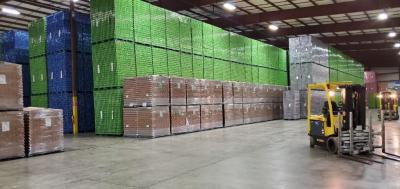
The beverage industry operates under a unique set of pressures. Unlike dry goods, beverages are often heavy, fragile, temperature-sensitive, and subject to strict expiration dates. When you combine these factors with the high costs of storage, labor, and logistics, the margin for error becomes razor-thin.
For beverage distributors and manufacturers, the warehouse is rarely just a storage area—it is the engine room of the business. If that engine is idling or burning excess fuel, your bottom line suffers immediately. To remain competitive, you must move beyond basic inventory management and embrace sophisticated warehousing strategies designed to trim overhead while accelerating throughput.
Here is a breakdown of the most effective strategies to optimize your beverage warehousing operations.
1. Implement Dynamic Slotting Based on Velocity
One of the most common inefficiencies in beverage warehousing is poor item placement. If your fastest-moving products—such as popular sodas, beer cases, or energy drinks—are tucked away in the back of the facility, your pickers are wasting valuable time traveling across the warehouse floor.
Dynamic slotting involves regularly analyzing your sales data to reposition inventory based on "velocity." High-turnover SKUs should be placed in the "golden zone"—the area closest to the loading docks and at waist height for easy access. By minimizing travel time, you reduce labor costs and significantly improve pick rates.
2. Embrace Integrated Inventory Management Systems (WMS)
If you are still relying on spreadsheets or manual tracking, you are operating in the dark. A robust Warehouse Management System (WMS) tailored for the beverage sector is no longer an optional luxury; it is a necessity.
A specialized WMS offers real-time visibility into your stock, enabling features like:
FIFO (First-In, First-Out) Tracking: Crucial for managing shelf-life and ensuring that older stock is shipped first, drastically reducing product loss due to expiration.
Batch and Lot Traceability: Essential for regulatory compliance and recalls, allowing you to isolate specific batches in seconds rather than hours.
Automated Replenishment: Triggering reorders based on actual movement rather than manual estimates, which prevents both overstocking (tying up capital) and stockouts (hurting customer relationships).
3. Optimize Vertical Space and Pallet Racking
Beverage products are dense. While the footprint of your warehouse may be fixed, your cubic footage is often underutilized. Modernizing your racking systems can unlock significant storage density.
Consider switching to high-density storage solutions like Push-Back Racking or Pallet Flow Racks. These systems allow for multiple pallets to be stored deep in a single lane, which is ideal for beverage distributors managing high volumes of a single SKU. By utilizing vertical space effectively, you can delay the need for expensive warehouse expansions or off-site third-party storage.
4. Prioritize Ergonomics to Reduce Labor Costs
Warehouse labor is often the single largest variable cost in beverage distribution. Beverage cases are heavy, and back injuries or physical fatigue can lead to higher turnover and slower pick speeds.
Investing in ergonomic material handling equipment—such as vacuum lifters, powered pallet jacks, and conveyor systems—is an investment in efficiency. When your staff isn't physically exhausted after four hours of work, accuracy improves, damage claims decrease, and morale stabilizes. A safer warehouse is, by definition, a more efficient warehouse.
5. Leverage Cross-Docking for High-Turnover Goods
If your warehouse is functioning merely as a place to consolidate and store, you might be missing out on the power of cross-docking. Cross-docking is the practice of unloading goods from incoming trucks and immediately reloading them onto outbound trucks with little to no storage time in between.
For high-demand seasonal beverages or top-tier brands, cross-docking eliminates the picking, put-away, and storage costs entirely. By streamlining the flow from dock to dock, you reduce the physical handling of products, which in turn lowers the risk of breakage—a critical concern for glass-bottled products.
6. Focus on Climate and Quality Control
Beverage quality is non-negotiable. Fluctuations in temperature can ruin flavor profiles, compromise carbonation, and lead to leaking containers. Whether it’s wine, craft beer, or fruit juices, climate control is a significant overhead expense.
To reduce these costs:
Improve Insulation: Check your loading dock seals and door curtains. Drafts and temperature leaks force your HVAC systems to work overtime.
Zone your warehouse: Instead of cooling the entire facility to the level required by your most sensitive product, use partitioned, climate-controlled zones. This allows you to store non-sensitive products in a standard environment while keeping perishables in a smaller, more energy-efficient space.
7. Adopt Data-Driven Performance Metrics (KPIs)
You cannot improve what you do not measure. Beverage warehouse managers should be tracking specific KPIs to benchmark success. Focus your attention on:
Pick Accuracy: Mistakes cost money to ship back and re-ship.
Cost per Case Handled: This helps you understand the true operational expense of individual products.
Dwell Time: How long a pallet sits before it is moved or shipped out.
Inventory Shrinkage: Identifying if products are being damaged or "misplaced" consistently.
By identifying the bottlenecks via clear data, you can make targeted adjustments rather than guessing which area of the warehouse needs attention.
8. Sustainability as a Cost-Savings Driver
Modern consumers and retailers are increasingly focused on the environmental footprint of the supply chain. Beyond the ethical implications, sustainability often aligns perfectly with cost-cutting.
Reducing your energy consumption through LED lighting retrofits, optimizing truck loading to reduce the number of shipments, and implementing waste-reduction programs for broken pallets or plastic wrap all save money. These initiatives often qualify for tax incentives, further improving your bottom line.
Conclusion: Moving from Survival to Strategy
The
Beverage Warehousing landscape is challenging, but it is also ripe with opportunity for those who prioritize organization, technology, and staff well-being. By moving away from reactive firefighting and toward a proactive, data-informed strategy, you can turn your warehouse into a competitive advantage.
Start by auditing your current flow. Are your best-selling items in the right place? Is your inventory software working for you, or are you working for it? By making small, incremental changes in how you store, move, and track your beverages, you will see a direct impact on your operational costs and customer satisfaction levels.
The goal isn't just to store beverages; it is to ensure that every case that enters your warehouse is handled as efficiently as possible, protecting both the quality of the product and the health of your bottom line.